
If you haven’t been to the dentist in years, making the next appointment can feel like a major step.
You may wonder what the dentist will find, whether you will need a long list of treatments, or whether anyone will judge you for waiting. You may also simply be unsure what happens during a first appointment after such a long gap.
A return visit should begin with understanding your current oral health, not criticizing how much time has passed.
When you visit a Winter Garden dentist after years away, the appointment may include a conversation about your health and concerns, a comprehensive examination, diagnostic imaging when appropriate, and a discussion of what should happen next. A cleaning or treatment may happen that day, but neither should be assumed before the dentist evaluates your needs.
Knowing what to expect can make the process feel more manageable.
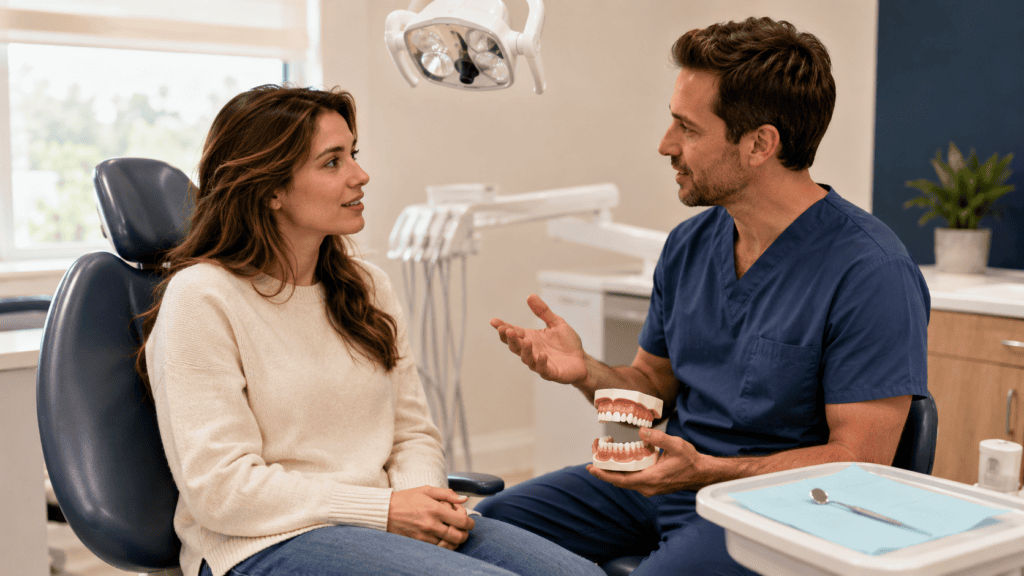
Why Do People Stay Away From Dental Care?
There are many reasons someone may go several years without a dental appointment.
Dental anxiety or a difficult past experience can make it hard to return. Work, caregiving responsibilities, moving, changes in health, or simply losing track of routine care can also create a longer gap than intended.
Some people wait because nothing hurts.
The absence of pain does not necessarily tell you everything about your oral health. Cavities, gum inflammation, worn restorations, and other concerns may sometimes develop with few noticeable symptoms.
An examination gives you a current starting point.
You do not need a perfect explanation for why you have been away. Sharing information that may affect your health, comfort, or treatment is more useful than worrying about defending the gap.
What Should You Share When Scheduling?
When making the appointment, mention that it has been several years since your last dental visit.
This can help the office schedule the appropriate type of appointment and allow enough time for a broader evaluation.
If you are experiencing significant pain, swelling, trauma, or a broken tooth, mention that as well. A potentially urgent concern may require a different type of appointment from a routine return to care.
The new patient information page can also help you understand the current appointment process.
Before your visit, gather what you reasonably can:
- Current medications
- Relevant medical conditions
- Allergies or previous reactions
- Information about prior dental treatment
- Details about pain, sensitivity, bleeding, or other changes
- Questions about your teeth, gums, bite, or smile
- Information about dental anxiety or a difficult previous experience
Do not postpone your appointment simply because you cannot find old dental records. The dental team can tell you whether previous information would be useful.
The First Part of the Visit Is Usually a Conversation
Your medical and dental histories may affect recommendations, so the appointment usually begins with questions.
The team may ask about:
- Current medications
- Medical conditions
- Previous dental work
- Tobacco use
- Dry mouth
- Past dental complications
- Symptoms you have noticed
- Your main concerns and goals
If anxiety is one of the reasons you have delayed returning, say so.
The American Dental Association recommends telling the dental team when you are anxious, asking questions, and establishing a signal if you need a break.
You can also explain what matters most to you. Maybe you are concerned about discomfort, chewing, bleeding gums, the appearance of a tooth, or simply understanding where your oral health stands today.
That conversation helps guide the examination.
What May a Comprehensive Dental Examination Include?
After a long gap, the dentist generally needs a broader picture of your oral health rather than looking at only one tooth.
Depending on your needs, a general dentistry evaluation may include looking at:
- Teeth for decay, cracks, wear, or other damage
- Existing fillings, crowns, bridges, dentures, or other dental work
- Gums and supporting tissues
- Areas of pain, sensitivity, swelling, or tenderness
- Bite and jaw function
- Soft tissues of the mouth
- Areas that may need monitoring or further evaluation
The dentist may also ask when certain symptoms began and what seems to make them better or worse.
A tooth that looks damaged does not automatically require one particular procedure. Recommendations depend on the examination, available diagnostic information, symptoms, restorability, and overall oral health.
Will You Need Dental X-Rays?
Possibly, but simply being away from the dentist for several years does not mean everyone automatically needs the same set of X-rays.
Diagnostic images may be recommended when they provide information that cannot be obtained through a visual examination alone.
For example, imaging may help the dentist evaluate areas between teeth, roots, supporting bone, previous dental work, and other structures.
Current American Dental Association guidance emphasizes selecting dental X-rays according to the individual patient’s history, previous images when available, clinical findings, and diagnostic needs.
We use dental technology when appropriate to support diagnosis, treatment planning, and patient understanding.
If images are recommended, ask what the dentist is looking for and how the results affect your treatment plan.
Will You Get a Cleaning at the First Visit?
Maybe.
Many patients returning after a long gap expect to receive a standard cleaning during the first appointment. That may be appropriate, but the dental team first needs to understand the condition of your gums and the amount of buildup present.
The evaluation may consider inflammation, bleeding, recession, periodontal measurements, and other findings that help determine appropriate hygiene care.
Depending on those findings and the time scheduled, a dental hygiene visit may happen during the same appointment or be scheduled separately.
If the cleaning happens later, that does not necessarily mean something serious is wrong. The first appointment may simply need to focus on gathering enough information to recommend appropriate care.
What If the Dentist Finds Several Things to Address?
Finding more than one dental concern does not mean every issue has to be treated immediately.
One patient returning after years away may mainly need preventive care and monitoring. Another may have an urgent tooth, active gum concerns, an older restoration that needs attention, or several areas that should be addressed over time.
The dentist may help separate findings into categories such as:
- Concerns that need prompt attention
- Active problems that may worsen
- Existing dental work that should be monitored
- Preventive or hygiene needs
- Longer-term restorative or cosmetic goals
Some treatment may be time-sensitive, while other care may be monitored or completed in stages.
Ask questions such as:
- What did you find?
- Which concern should be addressed first?
- Why does that area need attention?
- Can anything be monitored for now?
- Are there reasonable alternatives?
- Can treatment be divided into phases?
Returning after several years does not automatically mean you need extensive treatment all at once.
The goal is to understand what matters most and create a plan that fits the findings.
What If Dental Anxiety Is Part of the Problem?
Dental anxiety can become stronger when you do not know what to expect or fear being criticized.
Tell the team before the examination if you are nervous. Ask for explanations before each step, request a break when needed, and let the team know about any previous experience that makes dental care difficult for you.
For appropriate patients and procedures, nitrous oxide may be discussed as a comfort option.
It is not automatically necessary for a dental examination, and suitability depends on your health history and the care being planned. Nitrous oxide is a confirmed service, but it should not be presented as guaranteeing a pain-free or anxiety-free experience.
If completing everything during one appointment feels overwhelming, ask what actually needs to happen that day and what can reasonably wait.
How Do You Move Forward After the Appointment?
Before leaving, make sure you understand the next step.
It might be:
- A professional cleaning
- Monitoring an area
- Treatment for an active concern
- Further evaluation of a damaged tooth
- A preventive follow-up
- A phased treatment plan
If several recommendations are discussed, ask for them in clear language and make sure you understand why each one was suggested.
At home, focus on the instructions that apply to you rather than trying to compensate for years away overnight.
Consistent brushing, cleaning between the teeth, and returning for the follow-up schedule recommended for your individual needs can help you reestablish a practical dental routine.
Return to a Winter Garden Dentist Without Judgment
The hardest part of returning after several years may simply be making the appointment.
Once you are there, the goal should be to understand your current oral health, answer your questions, and decide what makes sense next.
You do not need perfect teeth before scheduling. You also should not assume that years away automatically mean extensive treatment.
If you are looking for a Winter Garden dentist after a long break from dental care, we can help you understand where things stand and discuss a manageable next step based on your individual needs.
Contact us to request an appointment and let us know if you have concerns about returning to dental care.