
A crown and a veneer can both improve a tooth’s appearance, but they cover different portions of the tooth and serve different treatment needs.
A veneer primarily covers the front surface. A crown surrounds more of the tooth and may provide protection when substantial structure has been weakened or lost. Choosing between them requires an examination of the tooth, its supporting tissues, and the bite.
At Winter Garden Family & Cosmetic Dentist, we consider your cosmetic goals alongside the tooth’s health and function. We explain why an option may be appropriate, how much preparation it involves, and what ongoing care it needs.
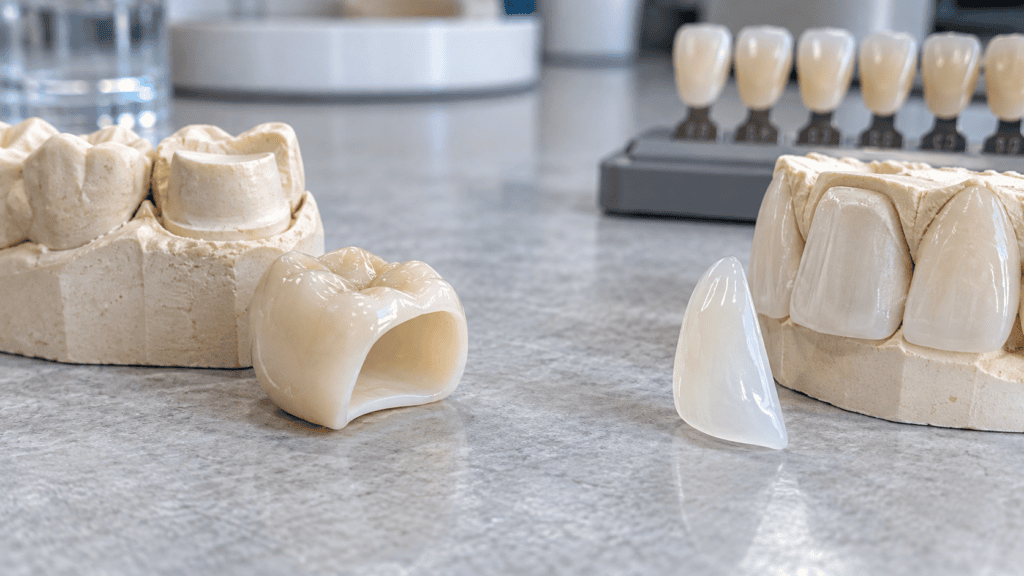
Dental Crown vs. Veneer: The Main Differences
Porcelain veneers are thin restorations commonly used to change the color, shape, size, or proportions of visible teeth. They may address minor chips, small gaps, or selected areas of wear when the tooth is suitable for treatment.
A dental crown covers the visible tooth more completely. It may be recommended for a tooth weakened by extensive decay, a large filling, a fracture, or significant wear.
| Comparison | Veneer | Crown |
| Coverage | Primarily the front surface | Surrounds the visible portion of the tooth |
| Common purpose | Cosmetic changes and selected minor defects | Structural protection, restoration, and appearance |
| Common location | Visible front teeth | Front or back teeth |
| Preparation | Usually involves a smaller area | Usually involves more surfaces |
| Tooth condition | Requires suitable remaining structure and bonding conditions | May suit teeth needing broader protection |
| Ongoing care | Home care, bite monitoring, and professional evaluations | Home care, bite monitoring, and professional evaluations |
This is a starting point for discussion. Similar-looking teeth can require different treatment because the condition beneath the surface may differ.
How Dentists Compare Strength and Protection
A useful comparison considers how the restoration will work with the remaining tooth during biting and chewing.
Remaining Tooth Structure
A mostly healthy tooth with a small cosmetic concern may not need a crown. A veneer or a less extensive option may address the concern while preserving more tooth structure.
A tooth with weakened walls or a large existing restoration may need broader coverage. A crown can help protect vulnerable areas when the remaining tooth can support treatment.
Veneers depend on appropriate tooth selection and bonding conditions. Healthy enamel is an important consideration. A veneer generally does not provide the same coverage as a crown for a tooth with substantial structural damage.
Tooth Position and Bite
Front teeth help bite through food, while back teeth handle much of the chewing load. The direction and concentration of those forces affect restoration planning.
Your dentist checks how your teeth meet and move against one another. A deep bite, uneven contacts, clenching, or grinding may affect whether a proposed restoration is suitable.
Both crowns and veneers can be damaged by excessive forces. The team may discuss changes to the treatment plan or additional protection when appropriate.
The Extent of a Crack
A small chip or superficial enamel line differs from a deeper crack. Treatment depends on the crack’s location, extent, and involvement of the tooth’s inner tissues.
Some cracked teeth may need root canal treatment and a crown. Others cannot be predictably restored and may require extraction. A crown can protect a suitable cracked tooth, but it does not heal the crack or guarantee that it will stop progressing.
How Dentists Compare Appearance
Both treatments can change a tooth’s visible color, shape, size, and proportions. The appropriate approach depends on what needs to change and whether the tooth can support it.
Veneers may be considered for discoloration, minor chips, irregular shapes, or small gaps involving otherwise suitable teeth. Crowns may address similar appearance concerns when the tooth also needs more extensive structural restoration.
For example, a heavily restored front tooth and a neighboring healthy tooth might need different approaches even if the patient wants both to look more balanced.
Planning includes shade, translucency, surface texture, tooth length, gumline, and the appearance of neighboring teeth. Existing restorations also influence how a new restoration can blend into the smile.
Our approach to cosmetic dentistry begins with discussing your goals and examining your oral health. Photographs of another person’s smile can help explain preferences, but they cannot establish which treatment your teeth need.
Which Option Preserves More Natural Tooth Structure?
A veneer usually requires preparation over a smaller area than a crown. Porcelain veneer treatment generally involves removing some enamel from the front and sides of the tooth. This makes treatment irreversible.
A crown usually requires preparation around more surfaces so the restoration has room to fit and function. That preparation may be appropriate when the tooth is already weakened or extensively restored.
Conservative planning considers both preservation and adequate protection. Choosing a smaller restoration is useful only when it can appropriately address the tooth’s condition.
Before proceeding, ask which healthy surfaces would be altered and why. Understanding that commitment is especially important when the main concern is cosmetic.
What Happens During the Evaluation?
The dentist first asks about your concerns, symptoms, previous treatment, and goals. Mention pain, sensitivity, changes in your bite, or a history of clenching and grinding.
The examination considers remaining tooth structure, existing fillings, gum health, and biting contacts. Imaging may be recommended when needed to assess findings that are not fully visible.
Active decay, infection, or gum disease should be addressed before elective cosmetic treatment. A veneer does not treat an underlying dental problem.
You can use the consultation to ask:
- Why is this option appropriate for this tooth?
- How much preparation would it require?
- Could a less extensive treatment meet the same need?
- What limitations, risks, and maintenance should I understand?
The recommendation should connect your goals with specific clinical findings. You should have an opportunity to ask questions before deciding on treatment.
Can Crowns and Veneers Be Used Together?
Some treatment plans include both, with each tooth evaluated separately.
For example, one damaged front tooth may need a crown, while neighboring teeth with cosmetic concerns may be suitable for veneers. Their shade, shape, and bite can be planned together.
This does not mean every neighboring tooth needs treatment. The plan should explain which teeth have a clinical or cosmetic concern and why a particular approach is proposed.
Our restorative dentistry approach considers the condition of each tooth within the overall smile.
When Might Another Option Be Appropriate?
Sometimes a different treatment can address the concern with less preparation.
Professional whitening may be considered for suitable discoloration. Dental bonding may address a small chip, gap, or uneven edge. Invisalign® may be discussed when tooth position or bite alignment is the main concern.
For selected damaged back teeth, inlays and onlays may restore the affected area without full crown coverage.
These options have their own indications and limitations. The aim is to choose care that fits the tooth and your goals.
How Do You Care for Either Restoration?
Natural tooth structure remains beneath crowns and veneers. Decay can develop around restoration edges, and the surrounding gums still need care.
Brush twice daily with fluoride toothpaste and clean between teeth each day. Ask the team to demonstrate cleaning around your restoration if an area is difficult to reach.
Keep recommended dental evaluations, avoid chewing hard objects, and discuss clenching or grinding. Contact the office if a restoration feels loose, your bite changes, or you develop discomfort.
Frequently Asked Questions
Is a crown stronger than a veneer?
A crown provides broader coverage, which can help protect a weakened tooth. A veneer can be durable on an appropriately selected tooth. Suitability depends on the remaining structure, restoration design, and bite rather than a universal strength ranking.
Is a veneer always more natural-looking?
No. Both can be planned to blend with surrounding teeth. Appearance depends on factors including tooth shade, material selection, design, gumline, and neighboring restorations.
Can a veneer repair a cracked tooth?
A veneer may address a minor chip or selected surface concern. A deeper crack needs evaluation to determine whether the tooth can be restored and which treatment is appropriate. Some cracks make restoration unsuitable.
Which option suits a discolored front tooth?
The cause of discoloration and the tooth’s structural condition matter. Whitening, bonding, or a veneer may suit some teeth. A weakened or heavily restored tooth may need a different approach, including a crown.
How long do crowns and veneers last?
Longevity varies with the tooth, restoration, bite, habits, and ongoing care. Both may eventually need repair or replacement. Your dentist can explain the maintenance considerations relevant to your situation.
Compare Your Options With a Winter Garden Dentist
Choosing between a crown and a veneer involves the tooth’s health, the protection it needs, and the appearance you hope to achieve.
At Winter Garden Family & Cosmetic Dentist in Winter Garden, FL, we explain the findings and help you compare suitable options with an emphasis on preserving natural teeth.
Schedule a Cosmetic and Restorative Consultation to discuss your concerns and an individualized treatment plan.