Signs You May Need A Root Canal
Not every toothache requires a root canal, but certain symptoms may mean the inside of the tooth needs attention. Dr. Chokshi will examine the tooth and may recommend digital X-rays to understand what is happening below the surface.
You may need a root canal if you have persistent tooth pain, lingering sensitivity to hot or cold, pain when biting or chewing, swelling near the tooth, a pimple-like bump on the gums, darkening of the tooth, or a tooth that has been deeply damaged.
Sometimes a tooth that needs root canal therapy does not hurt constantly. Symptoms can come and go, which is why it is important to have changes evaluated rather than waiting for pain to become severe.
How Root Canal Therapy Works
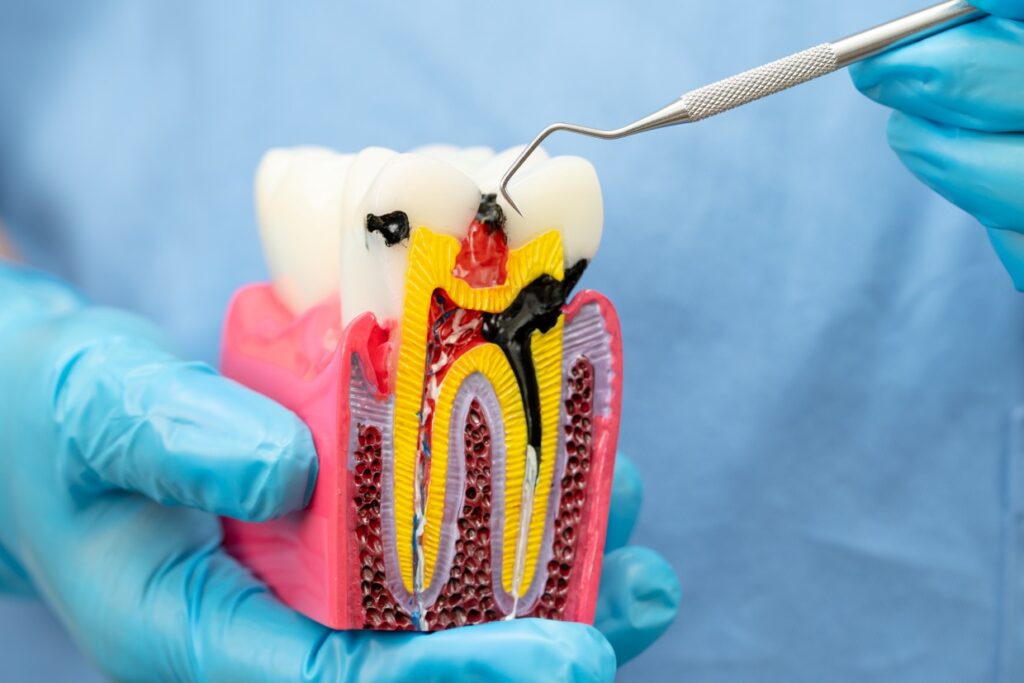
Inside each tooth is soft tissue called pulp, which contains nerves and blood vessels. When this tissue becomes infected or inflamed, root canal therapy is used to remove the affected pulp, clean the inside of the tooth, and seal the space.
The goal is to treat the source of infection or inflammation while preserving the natural tooth structure. After root canal therapy, a crown may be recommended to protect and strengthen the treated tooth, especially if it has lost significant structure.
Dr. Chokshi will explain the process, why treatment is recommended, and what type of restoration may be needed afterward.
Rotary Endodontics For Efficient Treatment
Our office uses rotary endodontics to support root canal therapy. Rotary endodontics uses a specialized electric handpiece to help clean and shape the inside of the tooth with precision.
This technology can support an efficient treatment process and may help preserve as much natural tooth structure as possible. It also allows Dr. Chokshi to work carefully within the narrow spaces inside the tooth.
Technology is only part of the experience. Our team also focuses on communication, comfort, and helping you feel prepared before treatment begins.
What To Expect During Your Visit
Your visit begins with an exam and a conversation about your symptoms. Dr. Chokshi may take digital X-rays to evaluate the tooth roots, surrounding bone, and signs of infection. If root canal therapy is recommended, our team will explain what to expect before treatment starts.
During the procedure, the affected tissue inside the tooth is removed, the canals are cleaned and shaped, and the tooth is sealed. Depending on the tooth and your treatment plan, a final restoration may be placed or scheduled afterward.
Our team will provide aftercare instructions and let you know what symptoms are normal after treatment and when to call the office.
Root Canal Therapy Compared With Extraction
When a tooth is infected or badly damaged, some patients wonder whether it should be removed instead of treated. In many cases, saving the natural tooth may be the preferred option when the tooth can be predictably restored.
Root canal therapy can help preserve the tooth, maintain chewing function, and prevent the need for immediate tooth replacement. However, if a tooth is too damaged to support a restoration, extraction may be recommended.
Dr. Chokshi will explain whether the tooth can be saved and what options are available if it cannot.
Schedule Root Canal Therapy In Winter Garden, FL
If you have tooth pain, swelling, lingering sensitivity, or discomfort when chewing, Winter Garden Family and Cosmetic Dentist can help. Call 407-654-9905 to schedule a visit with Dr. Chokshi and our team.